
// the chip war
SMIC vs TSMC: The Race China Can't Win, and Wins Anyway
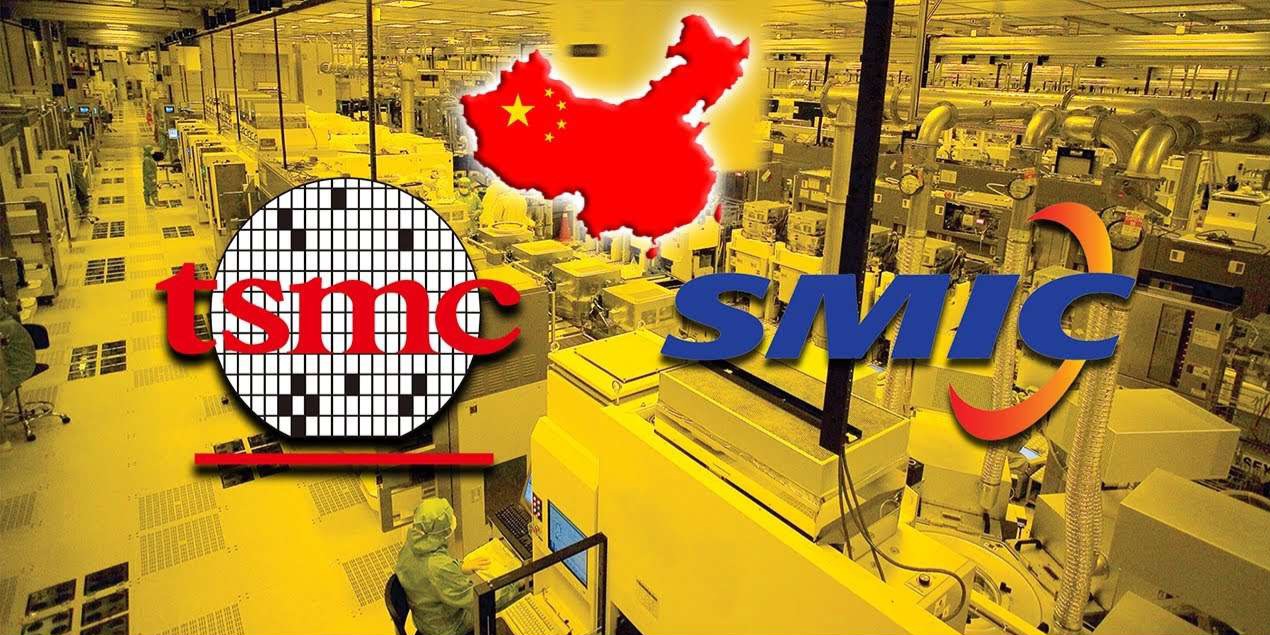
TSMC makes the world's chips and prints money doing it. SMIC, China's answer, builds 7nm without EUV under American sanctions. The interesting fight is not who is ahead today. It is who owns the next ten years.
In the last days of August 2023, Huawei put a phone on sale in China with no launch event, no spec sheet, and no mention of the chip inside it. Within hours, buyers were running speed tests and filming teardowns. Within days, a Canadian lab called TechInsights had the answer Washington had spent three years dreading. The Mate 60 Pro was running on a processor built inside China, on a 7 nanometer process, by a company the United States had been trying to wall off from exactly this. The chip was not supposed to exist. The timing made it sting. America's Commerce Secretary was in Beijing that very week trying to steady the relationship, and China replied with a slab of silicon that said, without saying a word, we did not need you for this.
01 / origins
The man who tried to beat TSMC twice
Before SMIC was a national champion, it was one engineer's second attempt at the same dream. His name was Richard Chang, or Zhang Rujing, and in 2000 he was fifty years old, fluent in the religion of the clean room, and quietly furious. Born in Nanjing in 1948, raised and educated in Taiwan, he had spent more than twenty years at Texas Instruments building fabs across the world. Then in 1997 he went home to Taiwan and founded his own foundry, Worldwide Semiconductor, to take on the giant of the island. Before it could stand on its own, TSMC bought it out from under him. The buyer's chairman was another Texas Instruments alumnus named Morris Chang. Two men, same first employer, same Chinese surname, no relation, on opposite sides of the most important manufacturing rivalry of the next quarter century.
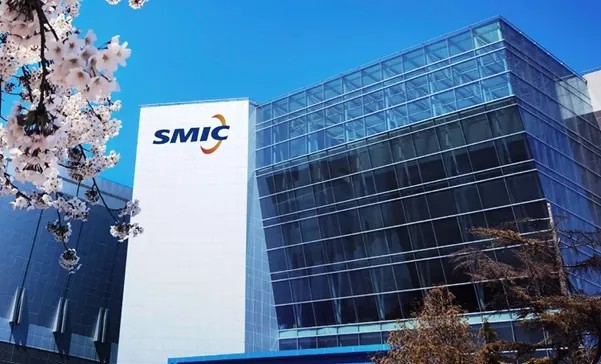
So Richard Chang did the only thing a twice and stubborn man could do. He went to the mainland and started again, this time with the wind of an entire government at his back. The year was 2000, the place was Zhangjiang in Shanghai's Pudong district, then still close enough to its former life as farmland that you could feel the new fabs sitting on old soil. The company was registered in the Cayman Islands for the convenience of foreign capital, but its heart would beat in Shanghai. They named it Semiconductor Manufacturing International Corporation. The name was deliberately plain. The ambition behind it was not.
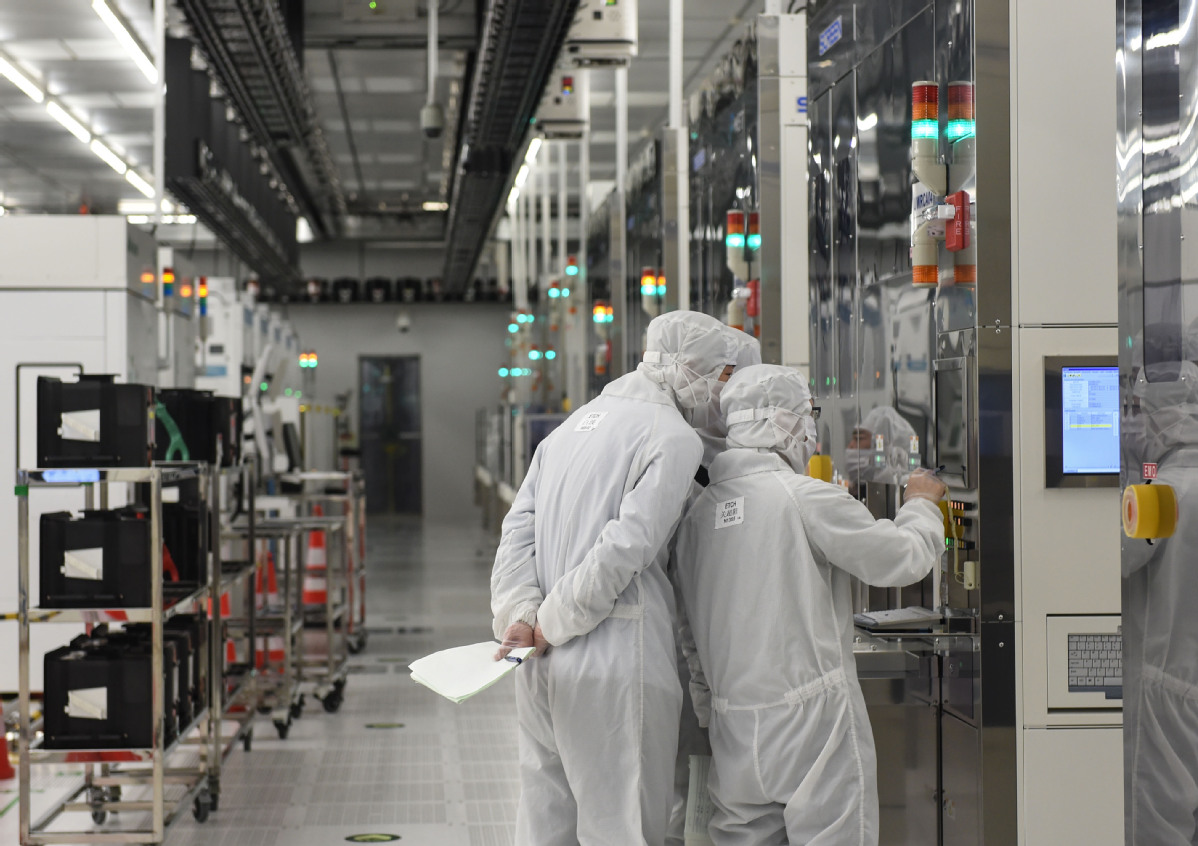
What Chang understood, and what made him dangerous, is that a chip fab is not a building you switch on. It is a recipe with hundreds of steps that has to run flawlessly the first time and every time after. Where to oxidize and at what temperature, how hard to drive the ions, how thick to plate the metal, how long to polish, where to test. Most of that knowledge does not live in textbooks. It lives in the reflexes of engineers who have made the mistakes already. Chang's shortcut was to bring those people with him. He recruited hundreds of veterans from Taiwan, the United States, Singapore and Japan, and a striking number of them came from one company in particular. That detail would soon cost him everything.
The speed was almost suspicious. SMIC went from installing equipment in August 2001 to qualified production by December of the same year. For a brand new foundry on virgin ground, that is not fast, it is impossible, unless you are not really starting from scratch.
02 / the rivalry
The knowledge that walked across the strait
In December 2003, TSMC sued. It accused SMIC of building its early processes on stolen trade secrets, and the evidence was not subtle. Among the documents was an email from an SMIC executive asking a TSMC employee to hand over process manuals. SMIC settled in January 2005, agreeing to pay 175 million dollars over six years. The language of the deal was cold. Nobody admitted guilt, but the money moved in one direction, and the message to the market was unmistakable. The young upstart had been caught, and the giant was watching.
It happened again. TSMC filed a second suit over the 130 and 90 nanometer generations, and in 2009 a California jury ruled against SMIC a second time. This time the price was 200 million dollars and a roughly ten percent equity stake handed to the rival it was supposed to be challenging. Three days after the settlement, Richard Chang resigned. The founder who had tried to beat TSMC twice had now lost to it twice, and the second loss took his company with it. He left to start yet another foundry. The people of China's chip industry would later call him the godfather of the country's foundry business, which is a generous title for a man who never got to run the thing he built.
Here is the deeper truth those lawsuits were really about, and it explains the next twenty years. In this industry the hardest thing to move across a border is not a machine. It is the recipe, and the recipe lives in people. Which is why the most consequential transfer in this whole story is not a tool or a blueprint. It is a man.
His name is Liang Mong Song. He earned a doctorate at Berkeley under one of the inventors of the modern transistor, then spent roughly seventeen years at TSMC, where he was one of the engineers who kept the company at the front of the field and his name sat on hundreds of its patents. He left under acrimony, surfaced at Samsung, and helped the Koreans leap a full generation forward, a move so painful to TSMC that it pursued him through the Taiwanese courts. In October 2017, he joined SMIC as co chief executive. Read that sentence again. The single human being who held more of TSMC's hard won process instinct than almost anyone alive walked across to China's national champion and sat down in the corner office. Under his hand, SMIC reached 14 nanometers in 2019 and then did the thing nobody outside thought was coming.
The hardest thing to smuggle in a chip war is not a machine. It is the knowledge of how to use one, and that knowledge has legs.The real lesson of the SMIC story
03 / the breakthrough
The slap in the face
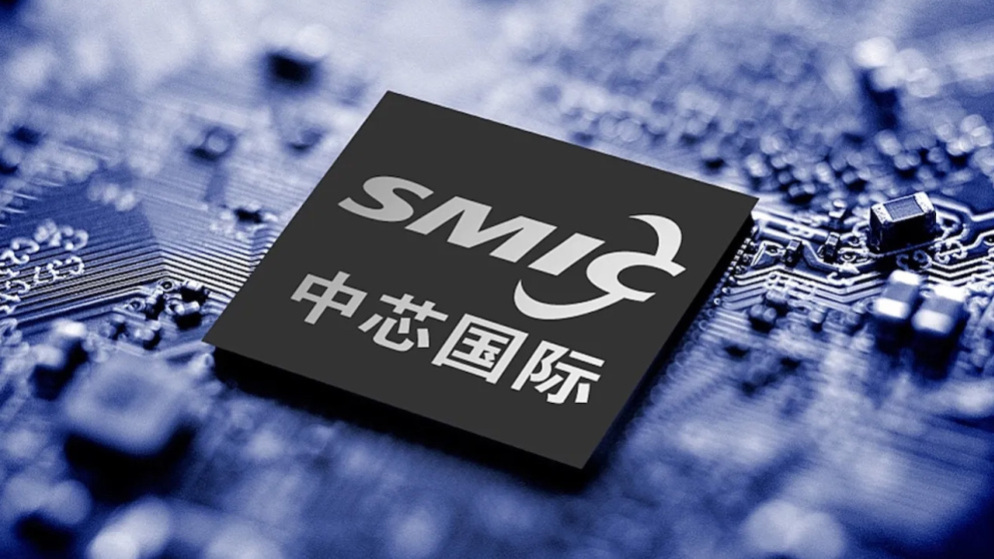
Return to that quiet phone launch in 2023. When TechInsights cracked open the Mate 60 Pro, they found a Huawei designed Kirin 9000S processor manufactured on SMIC's most advanced node, a 7 nanometer class process the company calls N+2. It was the first time a Chinese foundry had put 7nm class silicon, complete with the embedded memory a real smartphone brain needs, into a mass market consumer product. One of the lab's senior analysts described the discovery to reporters as a slap in the face to the United States. The phrase stuck because it was accurate.
What made it remarkable was the thing SMIC did not have. The crown jewel of modern chipmaking is a machine called an EUV scanner, which paints circuit patterns with extreme ultraviolet light at a wavelength of just 13.5 nanometers. It is the tool that lets TSMC and Samsung and Intel print the finest features in a single clean pass. Only one company on Earth makes it, the Dutch firm ASML, and since around 2019 the Netherlands has refused to license a single EUV machine to China under steady American pressure. SMIC reached 7nm with the machines it was allowed to keep, older deep ultraviolet scanners that work at 193 nanometers, by running the same wafer through the printing step over and over, building one fine pattern out of several coarser ones. The industry calls it multi patterning. It is ingenious, and it is brutal. Every extra pass costs more money, takes more time, and gives defects another chance to creep in.
It is worth being honest about what we still do not know. SMIC has never publicly confirmed the process, the yields, or the cost. Independent analysts have raised the obvious questions: can it make these chips in volume, and can it make them at a price that makes commercial sense. Those are exactly the right questions, and the company's silence is its own kind of answer. A breakthrough that you cannot repeat profitably is a demonstration, not a business. But a demonstration this loud still changes the politics, because it proves the wall has a door in it.
That wall, by the way, exists for a reason that has nothing to do with phones. The same advanced packaging and leading edge silicon that SMIC is chasing is the bottleneck the entire artificial intelligence boom now runs through. When the world's most valuable chips are built, they are built at TSMC, which is why the AI racks NVIDIA is shipping into every data center have quietly turned TSMC's packaging lines into the most important real estate in technology. The reason America is willing to wall off a phone chip is that it is really trying to wall off the future of computing, and SMIC sits on the wrong side of that wall.
04 / the numbers
The scoreboard nobody can spin
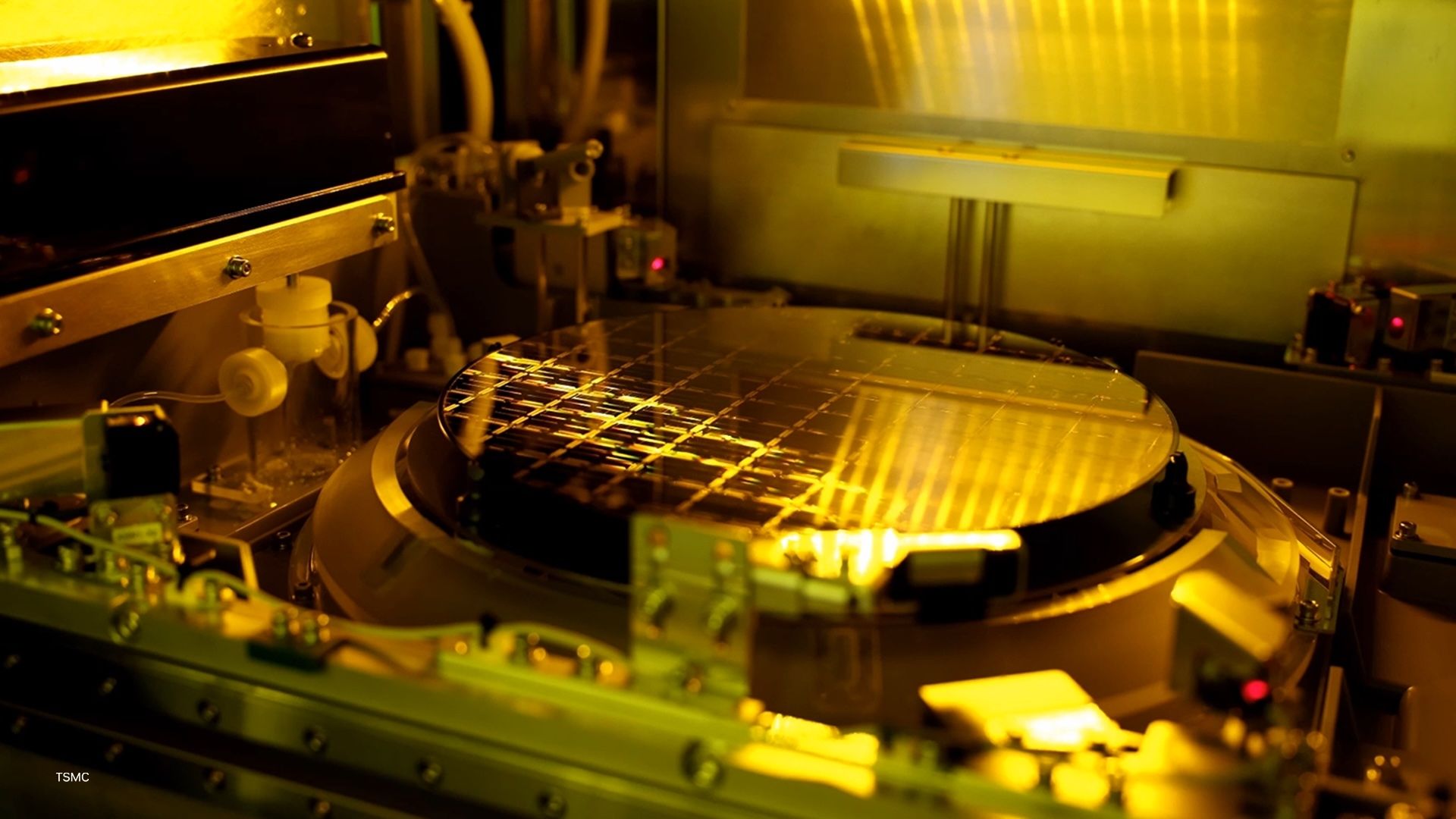
Strip away the drama and look at the two companies side by side, and the gap is not close. It is a canyon. In 2024 TSMC took in about 90 billion dollars and kept 56 percent of it as gross profit. SMIC took in about 8 billion and kept 18 percent. Put more bluntly: TSMC's net profit alone, more than 36 billion dollars, was over four times SMIC's entire revenue. One company is the most valuable manufacturer in the modern economy. The other is a national project that has only just learned to make money at all.
The detailed head to head only sharpens it. The most useful way to read the table below is not row by row but as a single picture: TSMC wins almost everything that money and technology can buy, and SMIC wins on the one axis that money cannot, which is being Chinese inside China at the exact moment China decided that mattered more than anything.
| Metric | TSMC | SMIC |
|---|---|---|
| 2024 revenue | ~$90.1B | ~$8.0B |
| 2024 gross margin | 56.1% | 18% |
| 2024 net income | ~$36.5B | ~$0.49B |
| Most advanced node in volume | 2nm (2025) | 7nm (N+2) |
| EUV lithography | Yes (ASML) | No, blocked |
| 2024 capital spending | ~$29.8B | ~$7.3B |
| Standing | #1 worldwide | #1 in China |
| Anchor customers | Apple, NVIDIA, AMD | Huawei, China |
| Optimized for | Global profit and the leading edge | National self-reliance |
One more figure that gets less attention but matters more for the future. By the third quarter of 2025, SMIC's fabs were running at 95.8 percent utilization, close to the physical limit, with monthly capacity past one million wafers and revenue for the first nine months already near 6.8 billion dollars. In a normal market, a fab running flat out is good news. In a constrained one it is something else. It means there is more demand than the company can serve, and that demand is increasingly captive. China's chip designers, cut off or spooked from sending their work abroad, are queueing for the one advanced foundry on home soil. SMIC is not winning that business on price or polish. It is winning it because, for a growing list of customers, it is the only door that will not be slammed shut by a decision made in Washington.
05 / the ceiling
Why money cannot buy the front
If self-reliance were only a matter of spending, China would already be done. The honest case against SMIC ever truly catching TSMC is not that the Chinese cannot do hard engineering. They obviously can. It is that the specific door to the leading edge is locked, the workaround is expensive, and the rival is not standing still.
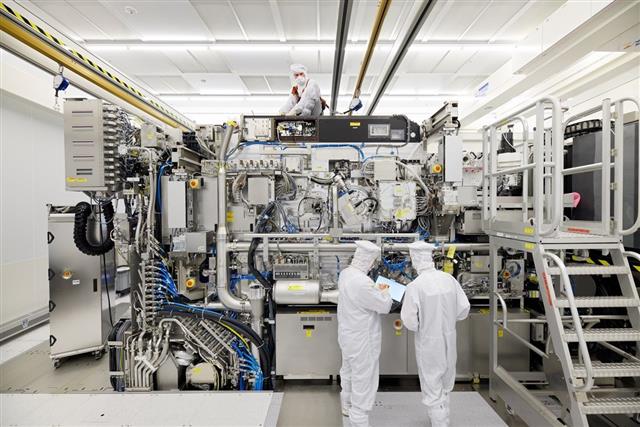
Start with the lock. There is no leading edge without EUV, and there is no EUV without ASML, and ASML cannot sell to China. Everything else flows from that one fact. To get to 5 nanometers without it, SMIC reportedly leans even harder on multi patterning, and the bill comes due. Industry estimates put SMIC's 5nm class wafers at roughly fifty percent more expensive than TSMC's equivalent, with yields that some analysts peg at around a third of TSMC's. A chip that costs half again as much and where two of every three attempts fail is not a product you sell to the open market. It is a strategic capability you fund because the alternative, having no advanced chips at all, is worse.
Then there is the quieter trap inside SMIC's own books. Building all this capacity means spending enormous sums on equipment, and that equipment has to be depreciated. By late 2025, depreciation was eating well over forty percent of the company's sales. SMIC can grow revenue, post record utilization, even beat its own guidance, and still see its profit margin pinned near twenty percent and its free cash flow stay negative. One blunt analyst note called it a state mandated utility wearing the costume of a growth stock. That is harsh, but it captures something real. The 22 percent gross margin SMIC hit in the third quarter of 2025 was a high water mark, and management promptly guided the next quarter back down. That is not caution. That is physics.
And the rival keeps moving. While SMIC fights to make 7nm pay, TSMC began ramping 2 nanometer production in 2025 and lined up the generation after that, with both Intel and AMD already named as customers for its newest node. Roughly three quarters of TSMC's wafer revenue now comes from its most advanced processes, the ones the AI build out is desperate for. The same gold rush that turned NVIDIA into something far larger than a graphics card company is pouring straight into TSMC's most profitable lines. The leader is not coasting. It is sprinting, and the prize money is bigger than ever.
There is a sober outside view worth airing here, because good analysis does not only quote the bulls. Researchers at the Center for Strategic and International Studies have argued that China's 7nm achievement leaned heavily on DUV machines stockpiled from ASML before the export door closed, rather than on a fully home grown breakthrough, and that repeated claims of indigenous 5nm capability have not held up to scrutiny. By that reading, the wall is doing its job, and the demonstrations are thinner than the headlines suggest. It is a fair challenge, and any honest forecast has to sit with it rather than wave it away.
06 / the reframe
The wrong question
Here is where the easy story and the true story part ways. Everyone keeps asking whether SMIC can become China's TSMC, by which they mean the most advanced, most profitable, most trusted foundry for the entire planet. On that question the answer, for now, is no, and the reasons fill the section above. But that may be the wrong question, because it assumes China is trying to win the game TSMC is playing. It is not. It is building a different board.
TSMC is the masterpiece of a globalized world. Dutch light, American design tools, Japanese chemicals, Taiwanese genius, all meeting on one wafer to serve customers everywhere, optimized relentlessly for cost and performance. SMIC is becoming the symbol of the world that is replacing it, one that is splitting along national lines and where the question is no longer who is cheapest but who is allowed to sell to whom. In that world, you do not need to be the best foundry on Earth. You need to be a foundry that cannot be switched off from abroad. By that measure, China is not losing. It is methodically building exactly the thing it set out to build.
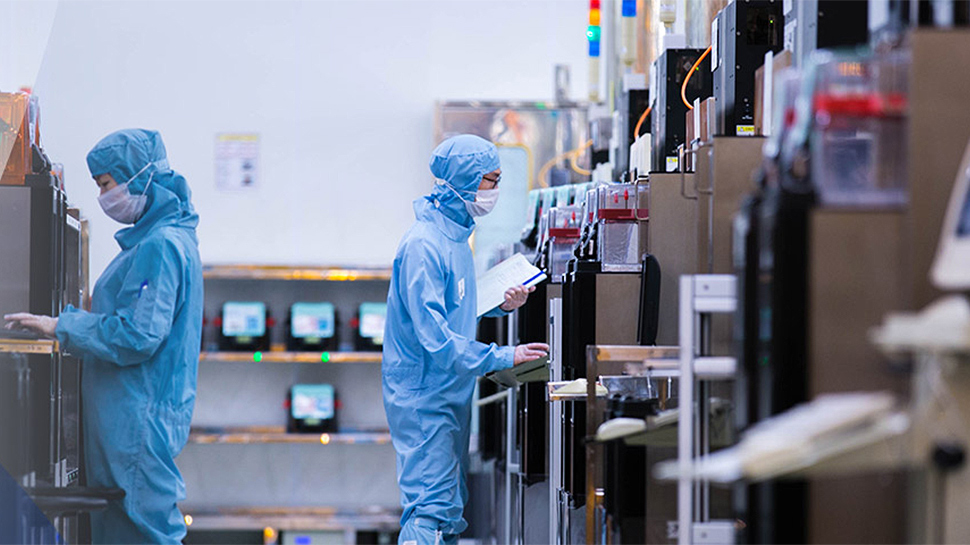
Watch where the money and the will are going. In May 2024 Beijing stood up the third phase of its national chip fund with 344 billion yuan, about 47.5 billion dollars, the largest of the three and pledged for a fifteen year horizon. This is not a stimulus bet that wants a quick return. It is a sovereign decision to treat advanced manufacturing the way a country treats an aircraft carrier. When the United States answered in December 2024 with its broadest controls yet, adding 140 Chinese entities to its blacklist and reaching even into the tools and memory China would need, Beijing did not flinch. It retaliated within a day by choking off exports of gallium and germanium, the very minerals the next generation of chips depends on. This is not a company fighting a competitor. It is two superpowers fighting over the means of production for the twenty-first century, and SMIC is the factory floor where that fight gets decided.
The most telling move of all is that China has decided to build its own ASML. Through a Huawei linked firm called SiCarrier, founded only in 2022, the country unveiled a whole suite of homegrown fab tools in early 2025, each named after a famous Chinese mountain. And in a development that reads like ambition made literal, Chinese engineers are reportedly testing a domestic extreme ultraviolet machine at a Huawei facility, using a different physics approach than ASML's, under an internal code name borrowed from the highest peak on Earth: Mount Everest. The honest caveat is large. Outside experts think a fully domestic scanner capable of sub 10 nanometer work is unlikely before 2030, and the early tools are rated for far coarser processes. But the direction is unmistakable. China is no longer just trying to climb the wall. It is trying to build its own ladder, from the ground up, so that no foreign government can ever take it away again.
07 / the forecast
The next ten years
So picture 2035. What does the honest forecast look like, holding both the bull case and the bear case in the same hand? The likeliest outcome is not that SMIC becomes TSMC, and not that it collapses. It is that the two stop being comparable, because they will be answering different questions for different worlds.
TSMC will almost certainly still be the world's leading foundry, a generation or two ahead on the bleeding edge, with the AI economy and a 165 billion dollar build out across the United States locking in its central place. Catching that is a moving target, and you do not close a multi year process gap against a rival who reinvests tens of billions every year and is sprinting. On the global, profit maximizing, leading edge axis, the gap may not shrink much at all over the decade. It could widen.
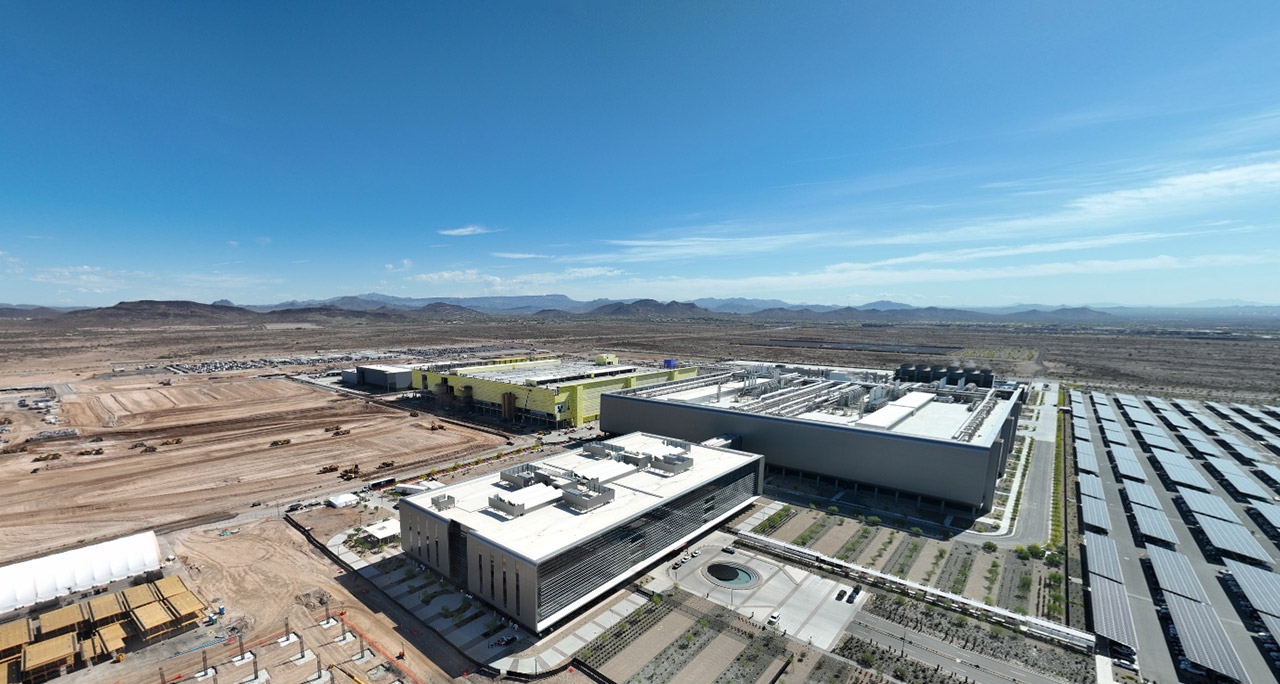
But on the axis China actually cares about, the picture flips. Over ten years it is entirely plausible that SMIC anchors a domestic supply chain that produces the overwhelming majority of the chips China needs for cars, industry, appliances, networking and a great deal of its artificial intelligence, with a mature node base that is genuinely world scale and an advanced node capability that, while expensive and a step behind, keeps Huawei and the Chinese state supplied no matter what any export rule says. If even one of the domestic lithography bets pays off in that window, the most important constraint loosens, and the whole calculus changes. That is a real prize, and it is the one Beijing is buying.
What would have to be true for the bolder claim, that China genuinely closes the gap, to come true? A working domestic EUV class tool at scale, a leap in yield that turns advanced nodes from a strategic cost into a profitable product, and a decade of political will that does not waver through downturns and corruption scandals and leadership changes. None of those is impossible. China has surprised the skeptics before, and the 7nm Kirin was supposed to be impossible too. But betting on all three landing inside ten years is a bet on a near perfect run, and chip history is not kind to perfect runs.
08 / the verdict
The verdict
Ask whether SMIC will overtake TSMC in the next decade and the truthful answer is no, not on TSMC's terms, and probably not even close. TSMC is too far ahead, too profitable, and protected by the one tool the Chinese cannot buy. Anyone selling you a clean story about China sweeping past the king of silicon by 2035 is selling the headline, not the physics.
But ask whether SMIC will shift the global balance, and the answer changes to yes, and it already has. A company that can build 7nm under a total EUV embargo, run its fabs flat out on captive national demand, and serve as the manufacturing spine of a 47 billion dollar sovereign program is not a rival in the ordinary sense. It is something stranger and more durable: the proof that the most globalized supply chain ever built can be pulled apart along a border, and that a determined state can keep advancing even with one hand tied behind its back. That does not make SMIC the next TSMC. It makes it the first of something new.
The deepest point in this whole saga is the one Richard Chang learned the hard way in a California courtroom and that every export rule since has tried and failed to repeal. The hardest thing to control in a chip war is not a machine or a blueprint. It is knowledge, and knowledge has legs. China has spent twenty-five years and a national fortune teaching itself to make the most complex object on Earth without permission. It is not finished, and it may never fully catch the leader. But every wafer that comes out of SMIC's clean rooms is a small, expensive answer to the only question that still matters: whether a country can write its own future in silicon, alone. The answer, so far, is a stubborn and costly yes.
SMIC will not be the next TSMC. It is becoming the first of something new: the chip that a superpower built to prove it could not be switched off.
09 / faq
Questions people actually ask
Is SMIC a real rival to TSMC?
On raw scale, not yet. In 2024 TSMC earned about 90 billion dollars at a 56 percent gross margin, while SMIC earned roughly 8 billion at 18 percent, and TSMC's net profit alone was more than four times SMIC's entire revenue. But SMIC is China's largest foundry and the manufacturing backbone of a national drive for chip self-reliance, which makes it a strategic rival even when it is nowhere near a financial peer.
What is SMIC's most advanced chip?
Its most advanced node in volume production is a 7nm class process it calls N+2, first seen publicly in the Huawei Kirin 9000S that powered the Mate 60 Pro in 2023. Reports in 2025 say SMIC has developed a 5nm class process using older DUV tools, but at much higher cost and far lower yield than TSMC's equivalent, which is why it has not shown up in mass market products.
Why can't SMIC just buy EUV machines?
EUV lithography is made by only one company on Earth, the Dutch firm ASML, and the Netherlands has withheld export licenses for EUV to China under American pressure since around 2019. Without EUV, SMIC reaches advanced nodes by running cheaper DUV machines through many extra patterning passes, which raises cost, slows output and lowers yield.
Will China overtake TSMC in the next ten years?
Probably not on TSMC's terms, meaning the most advanced, most profitable and most trusted foundry for the whole world, since TSMC keeps extending its lead with 2nm and beyond. The more likely outcome is a split industry in which TSMC stays the global leader while SMIC anchors a separate, sanction-proof Chinese supply chain that does not need to win on margin to shift the global balance of power.