
// wwdc 2026 · analysis
Siri Finally Got a Brain at WWDC 2026. Apple Didn't Build All of It.
Siri AI runs on a Gemini brain, iOS 27 makes a 2019 iPhone faster, and Tim Cook waves goodbye. Inside the keynote that quietly declared the app era over.
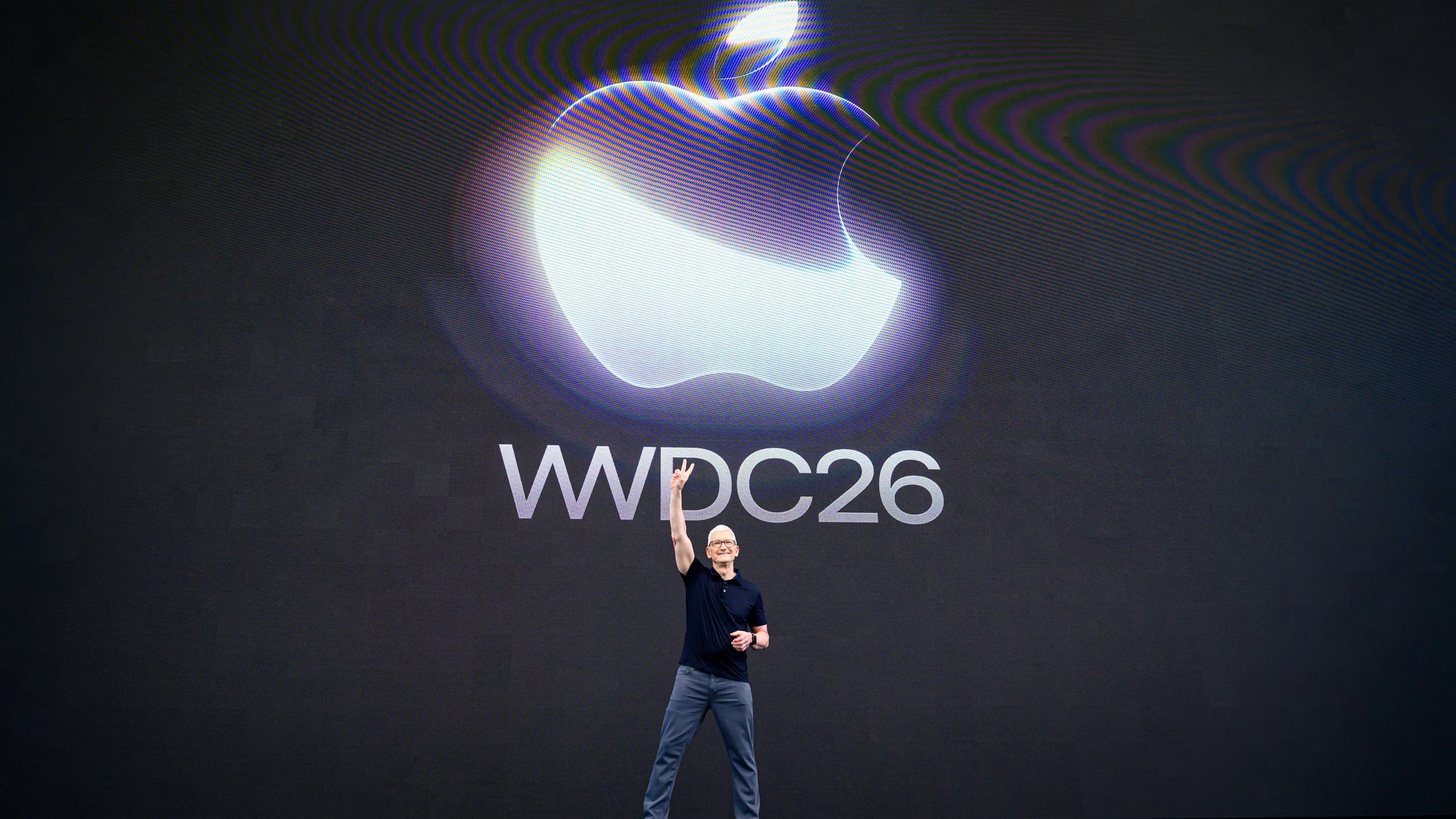
Tim Cook closed his final WWDC keynote as Apple's chief executive the way he opened his first one back in 2012: smiling, unhurried, and giving away less than the slides behind him. On June 8, outside Apple Park, he flashed a peace sign at the photographers, a fitting last frame for a man who spent a decade and a half turning Steve Jobs's company into the most profitable machine in corporate history without ever pretending to be its inventor. Come September 1 the job belongs to John Ternus, the hardware engineer of 25 years who, tellingly, never once appeared on stage. The farewell was the headline the cameras wanted.
The actual news was quieter, and it lived in a diagram most people scrolled past. At its center sat not an app, not a chip, not even Siri, but you: your habits, your calendar, your messages, your location, gathered into a layer Apple calls personal context. Around that core sat Apple's AI models. Above them, an orchestrator that runs across the entire system. And out at the rim, demoted to the outer ring like moons around a planet, sat the apps. Every platform shift Apple has ever shipped came with a picture like this, and the picture always told the truth before the products did.
Here is the whole of WWDC 2026 in one paragraph, for the reader who wants the answer before the argument. Apple announced Siri AI, a conversational, screen-aware assistant built on Apple Foundation Models that the company developed in collaboration with Google's Gemini family, arriving in beta later this year, in English first, on iPhone 15 Pro and newer. iOS 27, iPadOS 27, and macOS 27 Golden Gate land in September with a rebuilt CPU scheduler that Apple claims speeds up even a 2019 iPhone 11. Photos gains generative editing that can change a picture's camera angle after the fact. Parental controls get their deepest overhaul since Screen Time. And for the first time, you will be able to set Claude, ChatGPT, Gemini, or Grok as the default AI on an iPhone. That last sentence would have been heresy in this building two years ago.
01 / the lateness question
Why did this take so long?
Before a single feature deserves applause, the question hanging over every row of that audience deserves an answer: what took so long? Apple did not stumble into the AI era. It practically issued the invitations. Siri shipped on the iPhone 4S in October 2011, three years before Alexa existed and more than a decade before ChatGPT, and the company then spent that head start becoming the industry's longest running punchline.
The recent chronicle reads less like a roadmap and more like a confession. June 2024: Apple Intelligence is announced with a personalized, context-aware Siri as its crown jewel, demoed on stage and splashed across iPhone 16 advertising. March 2025: Apple admits, in a statement rather than a keynote, that the smarter Siri needs more time. That spring, Siri is taken away from the executive who ran AI strategy and handed to the Vision Pro's engineering chief under Craig Federighi's organization. Through the summer, senior researchers walk toward nine-figure offers, Meta hires away the head of the foundation models team, and reporting reveals that Apple's internal bake-offs kept reaching the same humbling verdict: outside models from Anthropic and OpenAI did the promised Siri jobs better than Apple's own. By January 2026 the company stops arguing with the scoreboard and announces the Google partnership instead. Eighteen months separate the promise from the product, and the product runs on a rented brain.
Fifteen years, one timeline
Siri ships on the iPhone 4S. A three-year head start on Alexa, eleven on ChatGPT.
Amazon's Alexa arrives. The assistant race begins in earnest, and Siri starts losing it.
Apple Intelligence announced; a personalized, context-aware Siri is promised on stage.
Apple publicly delays the smarter Siri. The promise becomes a liability, and an ad claim under scrutiny.
AI leadership reshuffled; senior researchers leave; internal bake-offs reportedly favor Anthropic's and OpenAI's models over Apple's own.
Apple announces the Gemini collaboration. Reported terms: a custom 1.2T model, around a billion dollars a year.
Tim Cook announces his exit; John Ternus named the next CEO, effective September 1.
Siri AI unveiled at WWDC. The apology finally gets a release date.
Sources: Apple keynotes and newsroom, plus Bloomberg's reporting on the delay, the bake-offs, and the deal terms. Reported figures remain unconfirmed by Apple.
Could Apple have done this three years ago? On hardware, unambiguously yes. By 2023 Apple owned the best consumer inference silicon on the planet; unified memory, the architecture that makes the M-series so unreasonably good at running models, had been shipping since 2020, and the company sat on the largest installed base of premium devices in history. Nothing in the physics of 2023 prevented a Gemini-class partnership either: Google was already wiring roughly twenty billion dollars a year into Cupertino for a search default, so the rails between the two companies were not just available, they were load-bearing. The ingredients were all on the counter.
On culture, just as unambiguously no. The machine that makes Apple Apple, the secrecy, the small on-device models, the privacy absolutism, the refusal to ship anything before it is polished, is tuned to perfect categories that hold still. Large language models do not hold still. They improve in public, monthly, embarrassingly, and the only way to ride them is to ship rough things early and iterate in daylight, which is the one motion this company has spent fifty years refusing to learn. The miss was not a bad meeting or a lazy quarter. It was Apple operating exactly as designed in a market that changed the physics, and the proof is that the fix required going outside: outside models, outside infrastructure, outside the doctrine.
Which brings us to the question nobody on a stage will ever answer. Cook announced his exit on April 20, weeks after the Gemini partnership went public and seven weeks before this keynote, and the order of those events is impossible to unsee. The official story is an orderly succession years in the making, and it is probably even true: Cook is sixty-five, Ternus has been groomed in public for half a decade, and the executive chairman's seat was already warm. But boards read the same headlines we do, and the longest, costliest delay of the Cook era happened to land in the one technology investors now price above all others. Correlation is not a confession. It is, however, a very loud coincidence, and the keynote that followed spent ninety minutes paying down exactly the debts you would clear before handing someone the keys.
02 / the cook era audit
The vertical decade
There is a harder version of the lateness charge, and it does not stop at Siri. Put the Jobs era on a timeline: the iMac in 1998, the iPod in 2001, the iPhone in 2007, the iPad in 2010. A product that rearranged ordinary life arrived roughly every three years, four at the outside. Now lay the Cook era beside it and watch the axis rotate. Since 2012 the progress has been overwhelmingly vertical: faster cores, faster GPUs, brighter and smoother screens, camera sensors that out-resolve the human eye. Magnificent engineering, nearly all of it stacked on a 2007 idea.
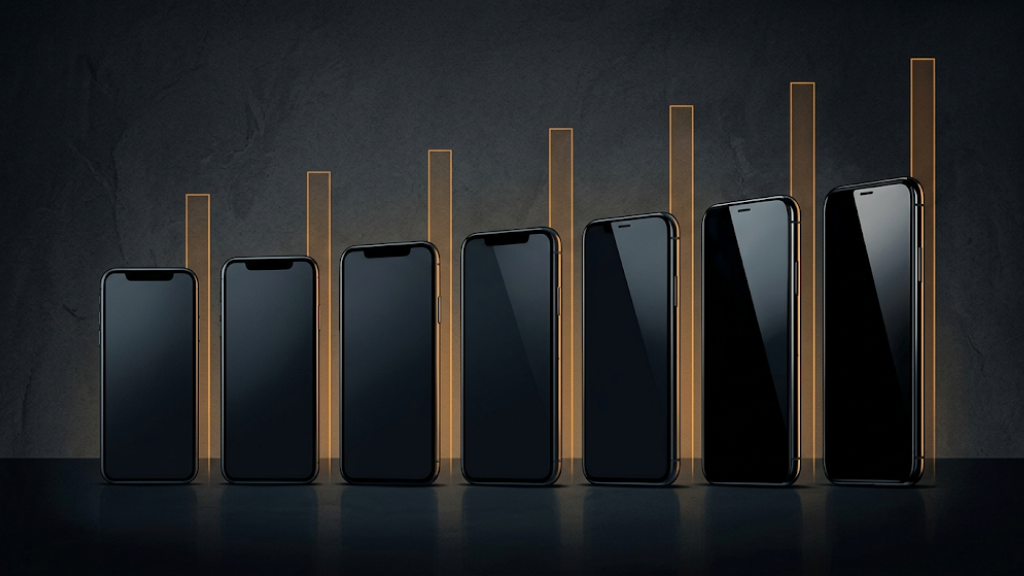
Honesty requires the counterevidence, so here it is. Apple Silicon was a genuine architectural revolution; the M1 in 2020 rebuilt the personal computer around a phone chip so successfully that most buyers never learned why their laptops suddenly ran cold and lasted all day. The Watch and AirPods each conjured a category out of thin air and grew into businesses larger than most of the Fortune 500. And the Vision Pro was a real swing at the revolutionary, a thousand patents in search of a reason to leave the drawer. Impressive, all of it. None of it changed what an ordinary Tuesday looks like the way the iPhone did, and a company only gets so many "best iteration ever" keynotes before the word revolutionary quietly leaves its vocabulary.
That is the uncomfortable frame for this week. AI is the first force since multitouch with the obvious power to rearrange the Tuesday, and Apple's response, judged honestly, is adoption rather than invention: a rented brain, a familiar body, a superb integration of someone else's breakthrough. The intent machine the keynote sketched is the outline of a revolution. The proof would be hardware that makes a grid of icons feel as quaint as a click wheel, and that proof, if it ever ships, ships under a chief executive we have never once seen run a keynote. No pressure, Mr. Ternus.
03 / the architecture
The intent machine
For eighteen years the iPhone has trained the entire human species in one ritual: want something, find the icon, open the app, dig through the menus. The app was the atom of the smartphone economy. App Store revenue, app install ads, app icon redesigns that made the internet riot: all of it rested on the assumption that the application is where intent goes to be fulfilled.
The architecture Apple showed on Monday quietly retires that assumption. In the new model you state what you want, by voice or by text, and the orchestrator decides which app's capability gets invoked to do it. The app does not disappear; it gets repositioned as a supplier of functions rather than a destination. You may never see the airline's interface again, only the boarding pass it surrenders to the system on request.
The intent stack
The slide of the week, redrawn: habits, calendar, messages, and location pool at the core; the orchestrator decides which app's function answers a stated intent; the interface waits at the rim.
For developers this is the most consequential slide of the week, and the least discussed. If users stop opening apps, the visible interface stops being where value lives. What survives is the quality of the function underneath: how fast it runs, how accurate it is, how much the orchestrator trusts it. A beautiful app with a mediocre API becomes less valuable than an ugly app with a flawless one. Whole categories of design work just changed job descriptions, and nobody on stage said so out loud.
An intent-centric system, to give it a clean definition, is one where the operating system maps a stated goal to whichever installed capability can satisfy it, without the user selecting the application themselves. Apple did not invent the idea. It is the same bet Microsoft and NVIDIA are making on the PC, and the same one every agent startup has been screaming about for two years. What Apple brings is the thing it always brings: well over a billion devices on which the bet becomes a default.
04 / the assistant
Siri AI: the apology, shipped
Strip away the keynote gloss and Siri AI is something rarer than a new product. It is an apology with a release date. Apple promised a personal, context-aware Siri at WWDC 2024 and then conspicuously failed to ship it, a delay that cost the company two years of headlines, an AI leadership shakeup, and no small amount of developer faith. This week the company finally showed the rebuild instead of the roadmap.
The new assistant holds an actual conversation, keeps its thread, and sees what is on your screen. It lives everywhere Siri has always lived, but it also gets a standalone Siri app, a chat interface in the ChatGPT mold where you can type or talk, attach files, and scroll back through past conversations. That history syncs across iPhone, iPad, and Mac through iCloud, encrypted, so the question you asked at your desk is still warm on your phone at the bus stop. On the Mac, Siri also moves into Spotlight, which is a sentence that will mean nothing to most people and everything to anyone who has watched Spotlight fail to find an email that is plainly sitting in Mail.
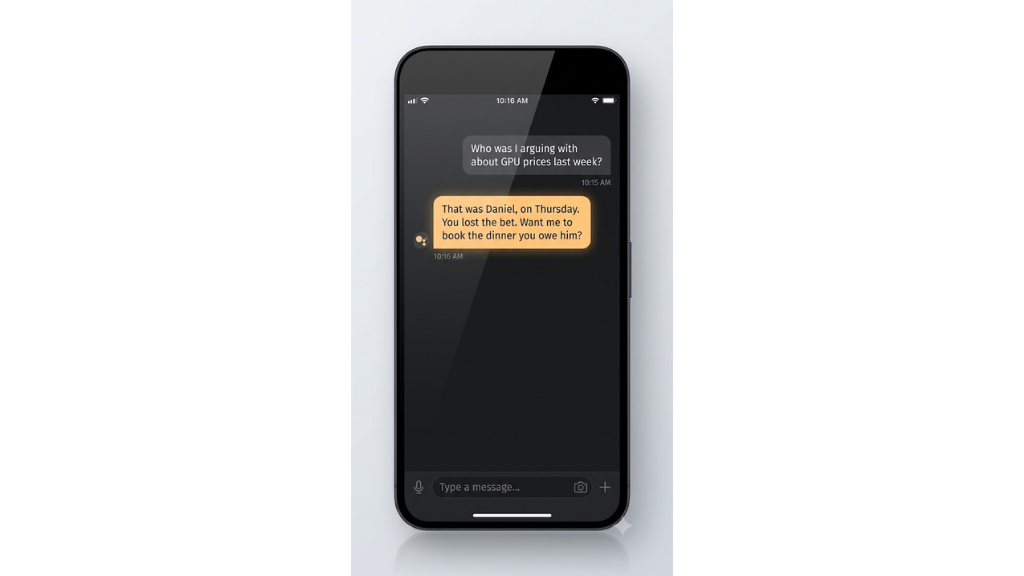
The demo that mattered was not a party trick. Apple showed Siri AI searching Messages and Mail simultaneously to dig out a booking confirmation, then checking the calendar against it, all inside a single conversational thread. That is the personal context layer doing its job: a private, on-device index of your data that the assistant can actually reason over. Ask it who you were arguing with about GPU prices last Thursday and it can check, name the friend, and then, because it also read the part where you lost the bet, offer to book the dinner you now owe them. Whether it does this reliably is the question every promised assistant has died on. Apple says this fall. We say: in English, in beta, and we will believe the reliability when we have tortured it ourselves.
Voices got attention too. Siri AI speaks with adjustable pace and expressivity, and the most natural of those voices are gated behind hardware we will get to shortly, because the gate is the most interesting spec of the week. The assistant can also write anywhere a text field exists, draft from a description, critique what you wrote, and proofread system-wide. None of this is novel in 2026. All of it is novel as a default on the world's most profitable phone.
05 / visual intelligence
A camera that settles the bill
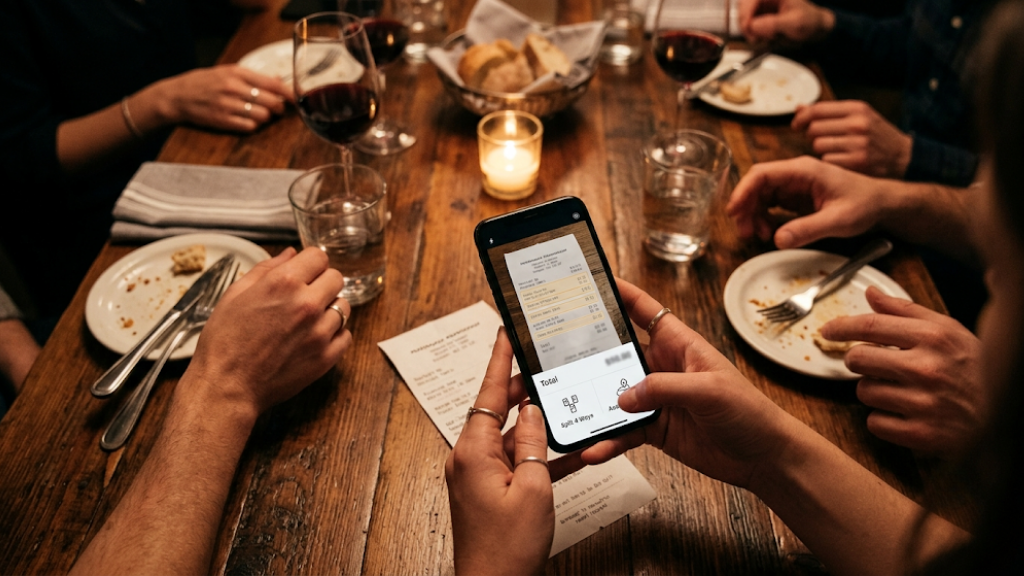
The feature that will actually colonize group chats is smaller and better. Visual Intelligence has been folded into a dedicated Siri mode inside the Camera app: point the lens at the world, tap the shutter, and Siri acts on what it sees. Point it at a restaurant receipt and every line item becomes selectable. Tap what you ordered, let it work out your share with tax and tip, and it fires Apple Cash requests to the table through iMessage, itemized, so the friend who ordered three negronis and then suggested splitting evenly has finally met their match. Apple says the receipt is processed on the device and the image never leaves it.
Point the same camera at a plate of food or a nutrition label and it estimates calories and nutrients and logs them straight into the Health app. Point it at a business card and the contact creates itself. Apple's software VP Sebastien Marineau-Mes ran the bill-splitting demo live, and it earned the most honest applause of the keynote because it solves a problem every single person in the room has personally suffered. This is Apple's oldest trick, the one it has been performing since the iPod: take a capability that already exists in five clumsy apps and make it a reflex.
06 / the deal
The Google inside
Now for the part Apple said softly. The next generation of Apple Foundation Models, the brains under Siri AI and the wider Apple Intelligence push, were developed, in Apple's own careful phrasing, in collaboration with Google and its Gemini family of models. Bloomberg reported before the keynote that the arrangement runs to a custom Gemini model of roughly 1.2 trillion parameters and costs Apple in the neighborhood of a billion dollars a year. Apple has confirmed the collaboration and conspicuously not confirmed the invoice.
You will not see a Google logo anywhere in iOS 27, and that absence is the design. The model wears an Apple suit, answers to an Apple name, and runs inside infrastructure Apple controls. Requests are routed in three tiers: simple ones never leave the device, mid-weight ones go to Apple's Private Cloud Compute, and only the heaviest land on Google's infrastructure, anonymized along the way so that, Apple says, no single request can be tied back to a person by either company. It is the same on-device versus cloud bargain we mapped in our field guide to running a local LLM versus renting a cloud API, except played for a billion users at once and dressed as a privacy feature. Craig Federighi put the company's chips on the table in one sentence: "We believe privacy in AI is non-negotiable." He added that outside experts can keep verifying that promise at any time, which is either reassuring or a dare, depending on how many independent auditors you personally know.
Where your request actually runs
On-device model
Simple requests and the personal context index. Nothing leaves the phone.
Private Cloud Compute
Mid-weight requests on Apple silicon servers, verifiable by outside experts, Apple says.
Gemini, in an Apple suit
The heaviest queries. Reported at ~$1B per year for a custom 1.2T model; unconfirmed by Apple.
Apple's claim: data is used only to execute the request, and neither company can tie a query to a person. The auditors get to keep that promise honest.
Hold that thought next to the week's most quietly radical setting. iOS 27 introduces Extensions, a system that lets you choose ChatGPT, Claude, Gemini, or Grok as the default AI behind Siri, Writing Tools, and Image Playground. Read that again: Apple, the company that needed regulatory artillery before it would let you change a default browser, will let you swap the assistant's brain. Part of that is regulator-proofing. Part of it is confidence that the orchestrator, the personal context, and the hardware are the moat, and the model is just the tenant. Either way, the most closed company in computing just made the assistant layer a marketplace, and that tells you exactly where Apple thinks the lock-in now lives.
07 / the fine print
Memory is the new megahertz
Every Apple Intelligence feature has a bouncer, and this year the bouncer checks RAM. The broad tier is unchanged and genuinely wide: Apple Intelligence and Siri AI run on iPhone 15 Pro and newer, and on any iPad or Mac with an M1 or later. If the device-support discourse on your timeline this week was apocalyptic, that is the sentence that defuses it.
The drama lives one tier up. Apple's most advanced on-device model, the one powering the most expressive Siri voices and a significant jump in dictation accuracy, requires 12GB of unified memory. That means iPhone Air, iPhone 17 Pro, and iPhone 17 Pro Max, plus iPads with M4 or later and Macs with M3 or later. The base iPhone 17, not yet a year old and carrying 8GB, does not make the cut. It is the first time Apple has drawn a memory line inside Apple Intelligence itself, and it converts RAM, a spec Apple spent twenty years refusing to even print on the box, into the number that decides what your phone can say and how well it hears you. "Supports Apple Intelligence" and "supports the advanced model" are now two different sentences, and exactly one of them will appear in the ads.
Who gets what in iOS 27
| Tier | Requirement | Hardware |
|---|---|---|
| iOS 27 itself | runs iOS 26 | Every supported iPhone, back to iPhone 11 (2019). Nothing dropped. |
| Apple Intelligence + Siri AI | 15 Pro / M1+ | iPhone 15 Pro and Pro Max, all iPhone 16 and 17 models, iPads and Macs with M1 or later. |
| Advanced on-device model | 12GB memory | iPhone Air, iPhone 17 Pro and Pro Max, M4 iPads, M3 Macs. The new gate. Base iPhone 17 misses it. |
The advanced tier currently buys two things: the most expressive Siri voices and a major dictation accuracy gain. Expect the list to grow; gates rarely shrink.
Two more asterisks before anyone in the comments buys a phone. Siri AI ships in English first, in beta later this year, with other languages to follow, which means most of the planet gets the old Siri with a new wardrobe for a while yet. And it will not ship on iPhone or iPad in the European Union at launch at all, a standoff Apple attributes to regulatory compliance and the EU would describe rather differently. Our own open question, the one we have not seen Apple answer anywhere: hundreds of millions of people live in two languages at once, messages half in English and half in something else. Whether the personal context index can build one coherent picture of a bilingual life, or simply trips over the seam, will decide how smart this assistant actually feels outside California.
08 / computational memory
Photos learns to bend reality, politely
The Photos app got the keynote's most jaw-loosening demo and its most uncomfortable subtext, in the same five minutes. The new Spatial Reframing tool lets you open a photo you already took, press reframe, and drag to reposition the camera, shifting the angle and zoom of a moment that is already over. The subject stays real; Apple Intelligence generates only the scene information needed to fill the gaps the new perspective exposes, leaning on Private Cloud Compute and on-device spatial models. A companion tool, Extend, paints plausible world beyond the original borders of the frame, and the long-mocked Clean Up has been rebuilt on stronger models that can finally remove a photobomber from a busy scene without leaving a smear where a human used to be.
Anyone who has tried to coax this exact trick out of today's best image models knows how hard a 25-degree perspective shift is to do convincingly. The demos looked startlingly good, which is precisely why your skepticism should stay switched on: demos are controlled, your cluttered kitchen is not, and early hands-on reports already note that faces can warp when the model invents too much. The richer tension came from Apple itself. Federighi told the room the company worries about whether photographs can remain something people trust as, in his words, "indicative of reality," and then introduced three tools whose entire purpose is to change what a photograph shows. Apple's resolution of that paradox is framing: these are corrections in the darkroom tradition, fixes for the cropped grandmother and the crooked horizon, not a fantasy generator. The framing is sincere. It is also a door, and doors do not stay half open.
09 / the snow leopard move
The update that makes a 2019 phone faster
Buried under the AI was the announcement we would put money on people still appreciating in 2030. Apple rebuilt the CPU scheduler, the deeply unglamorous component that decides which task gets the processor's attention and when, and it backported the work to old silicon. The claims: apps launch up to 30 percent faster, new photos appear in the library up to 70 percent faster, AirDrop transfers run up to 80 percent faster, with smaller wins for unlocking, camera launch, NFC, and Bluetooth power. Treat every one of those numbers as marketing until independent benchmarks land, because "up to" is the most flexible phrase in this industry and a scheduler cannot resurrect a worn battery. But the direction is unambiguous, and the direction is the story.
Because here is the part that broke the upgrade-cycle script: iOS 27 drops support for nothing. Every iPhone that runs iOS 26 gets it, all the way back to the iPhone 11 from 2019, which will now stretch across its eighth major release of iOS, further than any iPhone has ever been carried. A seven-year-old phone receiving an update that makes it measurably faster is the exact inverse of the slowdown saga that Apple paid up to half a billion dollars to settle, and the company knows it. Bloomberg's Mark Gurman reported months ago that Apple internally treats iOS 27 as its Snow Leopard moment, and the keynote proved the label. In 2009, Apple sold Mac OS X Snow Leopard on the promise of essentially no new features, just a cleaner, faster core, and that unsexy release bought the Mac a decade of stability. Doing the same to the iPhone, in the middle of an AI arms race, while your rivals ship features by the kilogram, is either discipline or penance. We suspect it is both, and we will take it.
Even Spotlight, the search box this publication has personally watched fail to find a file it was looking directly at, is finally getting a real index of the device's content. It says something about the last two years of Apple software that "search now finds things" earned a cheer.
10 / the human segment
The quietest standing ovation
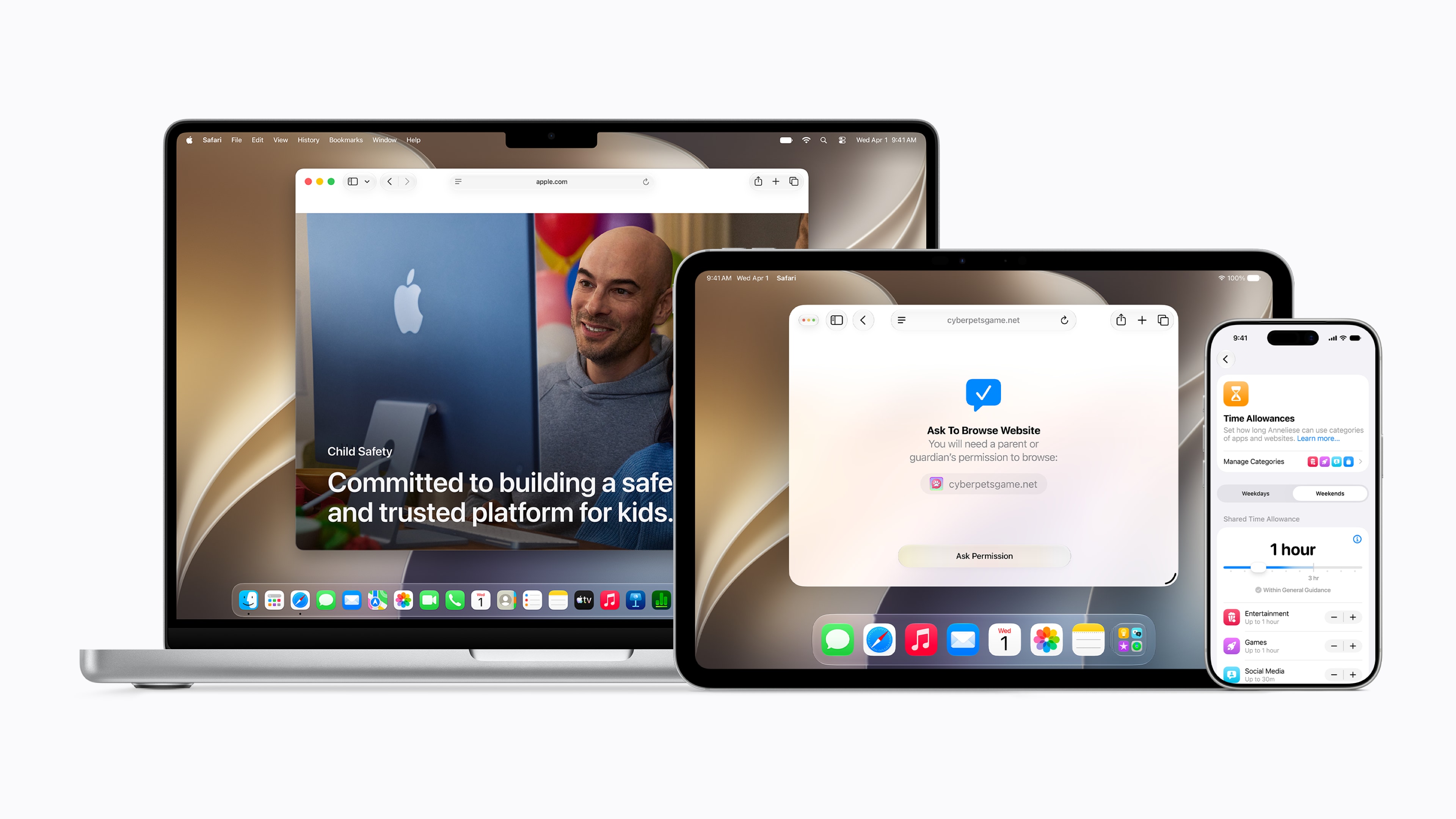
Developer conferences applaud APIs. This one had a moment where, by attendee accounts, parents in the audience were on their feet, and the engineering behind it deserves the attention. iOS 27 delivers the deepest rebuild of Apple's family controls since Screen Time arrived in 2018. Child accounts become mandatory for under-13s and can stay protective until 18, wrapping the whole device in age-tuned safeguards from setup. A new Ask to Browse inverts the open web's default: a child's Safari can reach no new website until a parent approves it, which turns the internet from an open ocean into a guest list. Time Allowances replaces blunt app timers with schedules by category, so games can sleep through homework hours without a daily negotiation.
The heaviest piece is the quietest. Communication Safety, the on-device system that detects and blurs nudity in Messages and FaceTime for minors, now also detects graphic violence and gore, the first time Apple has extended it beyond sexual content. The inference runs entirely on the device; the images are never shipped to a server to be judged. The timing was not subtle either. The very morning of the keynote, the UK government publicly gave Apple and Google three months to deliver device-level protections against children taking, sending, or viewing explicit images, with legislation as the stated alternative, and Australia's under-16 social media law is already redrawing defaults worldwide. Apple would like you to read Monday's announcements as conviction. Read them as conviction with a deadline, which is how most useful safety engineering has always shipped. Either way, this was the one segment of the keynote where the room was not applauding a feature. It was applauding relief.
11 / between the lines
What Apple would not say
Ask Apple about agentic AI, the buzzword every rival built its last keynote around, and the answer this week, as journalists in the room relay it, amounted to: genuinely exciting, and we are going to wait and see what turns out to be good before we ship it. You can hear that as complacency. We hear it as the most Apple sentence of 2026, because it describes precisely the playbook the rest of the keynote demonstrated. Apple watched the chatbot wars from the balcony for three years, let Google spend the billions and absorb the embarrassments of training frontier models, then wrote a check for the winner's engine and bolted it into a body only Apple can build. Late, calm, and holding the customer relationship: it is the iPod strategy, the smartphone strategy, the watch strategy, now running on someone else's transformer.
Whether that patience survives the handover is the real question of the next twelve months. Ternus takes the chair on September 1, a hardware engineer inheriting a company whose biggest open bets, foldables hinted at in the iOS 27 beta's own code, glasses, the home, whatever the orchestrator becomes, are all hardware-shaped. He was nowhere in this keynote, and yet the whole event read like a desk being tidied for the next occupant: fix the performance debt, settle the Siri promise, pay the AI bill, apologize to the parents. Cook's farewell message at the end was warm and brief. The clean desk was the louder goodbye.
12 / where we land
The verdict
Strip the keynote to its load-bearing idea and WWDC 2026 was not about features. It was Apple conceding, in architecture rather than in words, that the app-centric phone is ending and the agent era has started without waiting for Cupertino. The same battle is now being fought on every platform at once: Microsoft and NVIDIA spent Computex pitching RTX Spark, a plan to turn Windows itself into a machine where agents run locally, the open-source crowd is wiring up self-hosted agents like OpenClaw on hardware they own, and Apple just rebuilt a billion phones around an orchestrator and an intent layer. When every major platform redesigns itself around stating goals instead of tapping icons, the keyboard-and-grid smartphone stops being the destination and starts being the transitional fossil.
The most honest reading of Monday's diagram is that Apple knows the iPhone's successor will be whatever listens best, and it intends to own the listening.
So no, Apple did not out-build anybody this week. It rented the brain it could not finish in time, gated the best voices behind a memory chip, and skipped an entire continent at launch. But it also made a seven-year-old phone faster, told parents the truth, told users that generation will cost something, and handed its own assistant's job to open competition on its own devices. That is not the swagger of 2007. It is something Apple has historically been worse at: humility, shipped at scale. We will take the trade, and we will be holding the September beta to every promise made on that stage. The adoption, at last, is real. The revolution is still on backorder, and if it ever ships, it ships under new management.
13 / quick answers
Quick answers
Which iPhones get Siri AI and Apple Intelligence in iOS 27?
iPhone 15 Pro and 15 Pro Max, and every iPhone 16 and 17 model onward. On iPad and Mac, anything with an M1 chip or later qualifies. Siri AI itself arrives as a beta later this year, in English first.
What needs 12GB of memory in iOS 27?
Apple's most advanced on-device model, which powers the most expressive Siri voices and improved dictation. That currently means iPhone Air, iPhone 17 Pro and Pro Max, iPads with M4 or later, and Macs with M3 or later. The base iPhone 17, with 8GB, misses this tier.
Does iOS 27 drop support for any iPhone?
No. Every iPhone that runs iOS 26 gets iOS 27, back to the 2019 iPhone 11, alongside Apple's claims of up to 30 percent faster app launches and up to 80 percent faster AirDrop from the rebuilt CPU scheduler.
Is Siri AI really powered by Google Gemini?
Apple says its next-generation Apple Foundation Models were developed in collaboration with Google's Gemini family. Reports put the deal at roughly a billion dollars a year for a custom 1.2 trillion parameter model. Light requests stay on the device, mid-weight ones run on Apple's Private Cloud Compute, and the heaviest are anonymized and processed on Google infrastructure.
Why did Apple take so long to ship a smarter Siri?
Apple promised a personalized Siri at WWDC 2024, publicly delayed it in March 2025, reorganized its AI leadership, lost senior researchers to rivals, and found in internal testing that outside models outperformed its own. In January 2026 it announced the Gemini collaboration, and Siri AI is the first shipping result.
All Apple performance figures in this piece are the company's own claims from WWDC 2026 and await independent testing. Details attributed to attendee accounts come from journalists present at Apple's post-keynote briefings. Illustrations marked as AI-generated were created for Silicon Tales and are captioned as such.